Highways
A12 Colchester Concrete Bay Replacements
A section of the A12 between Junctions 28 and 29 had heaved beneath a newly resurfaced pavement, and nobody yet knew why. Breedon, working under the Highways England Eastern Region framework, called on TAG's expertise to investigate the defect, report on it and then carry out the repair across four bays covering 10 by 9 metres.
Investigation showed the problem ran deeper than the concrete slab: the road construction beneath it needed replacing too. TAG had to remove the asphalt surface and the concrete pavement layer in 2.5 by 2.25 metre sections using a chain-and-anchor lifting technique, since the asphalt overlay meant the usual vacuum lifters couldn't get a grip. Beneath that, the team excavated a further 750mm of formation to stabilise the ground properly rather than patch over the symptom.
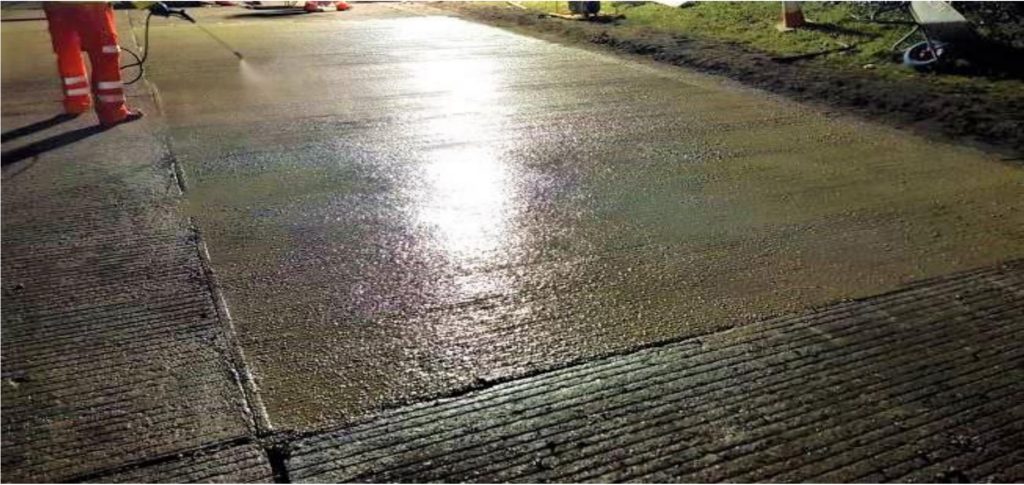
Each night the closure ran from 21:30 to 05:00, and the sequence had to go right first time: lift the old layers, excavate and reinstate 750mm of MOT Type 1 sub-base in compacted 150mm layers, drill and fix new dowel and tie bars, then place 500mm of CSA rapid-set concrete finished flush with the running surface so traffic could use it immediately, ahead of a later overlay by Breedon.
What got the road handed back on time every night was collaborative planning between TAG, Breedon and Highways England, backed by an experienced site team and a supply chain that knew the area. The repair was tested and verified on site, and the road reopened safely and on schedule throughout.
Key Facts
Client
Breedon
Location
A12 Junction 28–29, Colchester
Repair area
4 bays, 10m x 9m
Formation excavated
750mm below pavement
Closure window
21:30–05:00